Tuesday, December 10, 2019

Meat with a Twist


Throughout history, the environment has been getting progressively worse. These environmental issues extend to the mistreatment of animals in standard farms, where animals are raised for meat. There have been numerous attempts to prevent the continuation of these issues, such as persuading people to switch to a vegan diet and organically grown products. However, the effectiveness of these potential solutions has been minimal. Perhaps a better future solution can be found in the production of lab-grown meats. This option allows humans to continue eating their beloved meats while sparing animal lives and helping the environment in the process. This alternative to eating can potentially be the answer the world has been looking for because of its large range of benefits that affect the animal population, the environment, and even the human race.

Meat labThe concept of producing lab-grown meat, also known as "cultured meat," was first introduced to the world in the year 1998 by a man named Jon Vein. His research set the foundation for future experiments regarding cultured meat. As described by Maastricht University, the process of producing this specific type of meat begins by taking an animal's cell, such as a muscle or a fat cell. The acquired cell is then fed a specific nutrient that allows it to grow and eventually multiply. All throughout the process, the cell is carefully monitored to ensure that there is no harmful bacteria contamination occurring in it. After being nurtured for a lengthy period of time, the meat is then ready for consumption. Even though the methods used to acquire this piece of meat are different from typical methods used to obtain meat, the overall taste is similar.
   
The technology used in manufacturing cultured meat is identical to what is used in biomedicine. Sam Bloch, a staff writer at "The New Food Economy," states, "Cultured meat, for those who don't know, is a new kind of meat that emerges largely from technical advances in biomedicine, such as stem cell biology and tissue engineering. Biologically, it's meat. Like margarine...it could be a big leap forward for the companies that make stuff for supermarket shelves." It is evident that this technology is fully available for human use. However, the procedures in making the meat must still be finetuned for the meat to be widely accessible. Currently, lab-grown meats are not open to the public. But a man named Jonathan Shieber, an editor at TechCrunch and a previous senior reporter for Dow Jones, predicts cultured meat to be on store shelves by 2022.

The lab-approach to the production of meat offers both animals and the environment multiple benefits. It also presents several advantages for humanity. The most obvious benefit is the preservation of animal lives. It is not uncommon for an animal to be abused and mistreated while growing up on a farm. Then, when the time is right, they are taken to a slaughterhouse where they are violently killed. Also, sometimes questionable processes are used to produce profit-driven mutations, highlighting how unethical humans can be when producing meat. Switching to consuming lab-grown meat promotes the concept of modifying animal cells as opposed to animals in general. Protecting animals is just one of many advantages to adopting this way of producing meat. In addition to this benefit, the environment is also positively impacted. In a documentary I saw entitled Cowspiracy, Kip Andersen, "a young, concerned citizen hoping to put an end to sizable ecological crises," explains the roles animals play on environmental conditions. Andersen mentions how cattle typically produce a large sum of gases, including methane and CO2, when being raised. The process of growing cultured meat, however, does not involve as much gas emissions. Another way in which the production of lab-produced meat could potentially help the environment is through its usage of land. Andersen also acknowledges the fact that a large portion of land is devoted to cattle that live on standard farms. Cultural farming, on the other hand, would eliminate most of the land used for livestock by allowing the livestock to be more mobile and not so complacent. This, in turn, would allow the gases to be spread out across the globe as opposed to being cooped up in one single place. One last environmental benefit that comes with lab-grown meats focuses on factories. Factories are known to introduce a lot of harmful gases into the atmosphere. By eliminating the use of large factories that produce uncultured meat, global warming would not be as huge an issue as it is today. The numerous benefits that touch both the environment and the animals already gives plenty of reasons as to why one should support the production of lab-produced meats. However, there are several other benefits regarding humans that one should also consider.
   
In addition to the benefits offered to both the environment and the cattle, cultured meat might someday aid in long-duration space missions. Robert Kunzig, an experienced science journalist who is also a senior environment editor for both National Geographic and Discover Magazine, writes, "Modern Meadow [(a company that constructs Zoa, a platform composed of biologically-produced proteins)] sees an opening for [cultured meat] on long-duration space missions (which won't have room for livestock)" (308). Another advantage to investing in lab-produced meat would be its preservation. According to this idea, "The use of LAB as bioprotective cultures to extend the shelf life of fresh meat can improve microbial stability and safety in commercial meat preservation" (P. Castellano et al.). The extension of meat preservation serves as another small advantage to investing in this product. All in all, cultural farming offers numerous benefits to the animals, the environment, and the human population.

While there are several obvious benefits to changing one's diet by incorporating lab-produced meats, one might still wonder why a different approach to solving the environmental/animal crisis, such as organic farming, would not be just as effective. After all, switching to consuming organic only products would inevitably result in healthier soil. Additionally, popularizing organic farming would eliminate certain pesticides and fertilizers, thus improving human/environmental health concerns. David Biello, a journalist and associate editor of "Scientific American", claims that several farmers look to organic farming as a means to "minimize environmental and human health impacts by avoiding the use of synthetic fertilizers, chemical pesticides, and hormones or antibiotic treatments for livestock, among other tactics" (262). This resolution, to an extent, is true. However, while organic standards may reduce pesticide exposure and be better for the environment, it does not address the issue of animal slaughter and abuse.
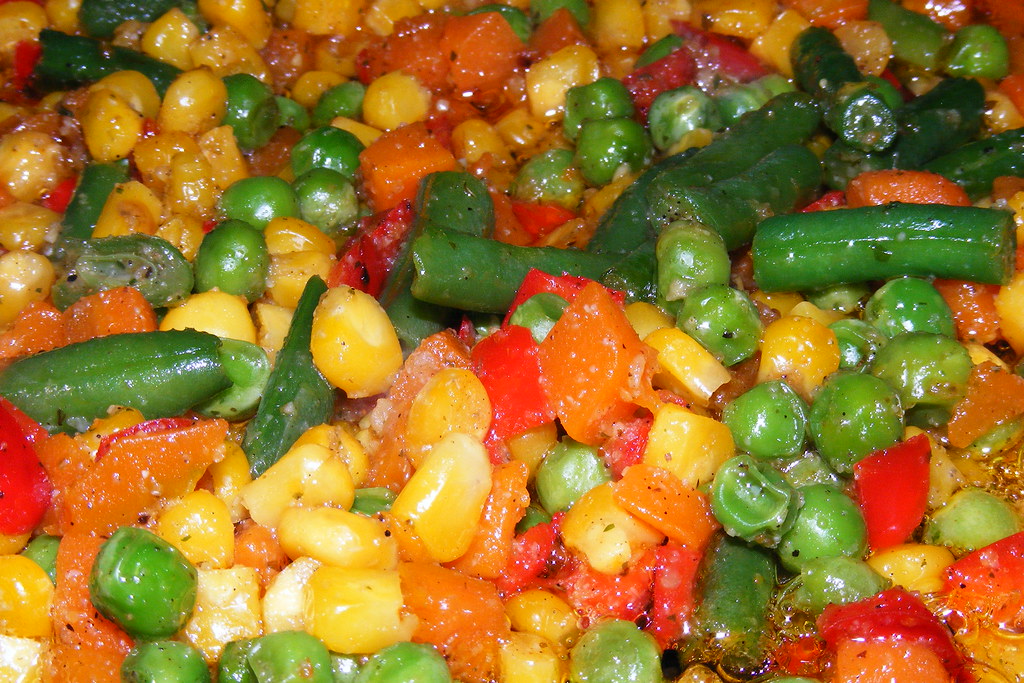

Vegetables
Another method one might consider when attempting to save both the environment and the animals is to become vegan. Unlike organic farming, veganism does address animal treatment issues while also addressing environmental concerns. One quote written by Bill McKibben, an environmentalist and widely published author/journalist, states that "going vegan is 50 percent more effective in reducing greenhouse gas emissions than switching to a hybrid car according to a University of Chicago study" (230). A common misconception many people have is the idea that he or she can influence the environment greatly if they discontinue the various activities they perform, such as prolonged showers and, like McKibben said, switching to a hybrid car. Just as McKibben mentions, humans can do more good for the environment by becoming vegan rather than stopping habits that might have little to no effect on the environment. However, I do not see a future in which a majority of the world is on a vegan diet. For many individuals, there is a strong desire to eat meat. Whether the reasoning for this is to satisfy a craving or due to the comfort of a family memory, it is still difficult for a large sum of people to come together and give up their love for meats in order to do the environment and the animals a favor. For this reason alone, I believe that people becoming vegan only has the potential to be an incremental improvement, not a comprehensive solution.

One final opposing viewpoint that a person might have regarding the lab-produced solution is based on cost and quantity. As of 2019, both the cost and the amount of meat able to be produced in one cell is less than desirable. However, I believe that through continued effort to improve production efficiencies and to develop technological breakthroughs, humans will be able to cut the price for producing cultured meat significantly while also improving the yields of lab-grown meat. As a matter of fact, Nicole Axworthy, a recipe developer and author, notes that prices are expected to drop from an initial $280,000 per patty to a final $10 per patty by 2021. This reduction in price would not only help the meat become affordable, it would also contribute towards better yield results. 

Without a doubt, cultured meat is arguably the most efficient way to protect both the environment and the animals. Although other forms of saving the environment, such as consuming organic products, and saving animals, such as becoming vegan, are available for human use, they are not the best approach to solve the festering issue involving both animal welfare and ecological stability. Through advanced research and new innovative technologies, humans, animals, and the environment can benefit from eating lab-produced meats.


Environment

Cow


Axworthy, Nicole. “Price of Lab-Grown Meat.” VegNews, 14 July 2019, https://vegnews.com/2019/7/price-of-lab-grown-meat-to-plummet-from-280000-to-10-per-patty-by-2021
Biello, David. “Will Organic Food Fail to Feed the World.” Food Matters. 2nd ed., edited by Holly Bauer, Bedford St Martin’s, 2017, pp 262-265
Bloch, Sam. “The Hype and Hope Surrounding Lab-Grown Meat.” The New Food Economy, 23 July 2019, https://newfoodeconomy.org/new-harvest-cell-cultured-meat-lab-meat/

Castellano, Patricia, et al. “A review of bacteriocinogenic lactic acid bacteria.” ScienceDirect, July 2008, https://www.sciencedirect.com/science/article/abs/pii/S030917400700314 2?via%3Dih  ub

"Cow" by maraker is licensed under CC BY-NC-ND 2.0 

COWSPIRACY: The Sustainability Secret. Directed by Kip Andersen, performances by Michael Pollan, Howard Lyman, Michael Klaper, Chad Nelsen, Heather Cooley, Susan Hartland, Bruce Hamilton, Lindsey Allen, Will Anderson, Netflix, 2014

"Environment" by harris nasril is licensed under CC BY-NC-ND 4.0 
Kunzig, Robert. “Test-Tube Meat: Have Your Pig and Eat It Too.” Food Matters. 2nd ed., edited by Holly Bauer, Bedford St Martin’s, 2017, pp 307-310
Maastricht University. What is Cultured Meat. https://culturedbeef.org/what-cultured-meat. Accessed 9 Dec 2019
McKibben, Bill. “The Only Way to Have a Cow.” Food Matters. 2nd ed., edited by Holly Bauer, Bedford St Martin’s, 2017, pp 229-232
"Meat lab" by UGA CAES/Extension is licensed under CC BY-NC 2.0 
Shieber, Jonathan. “Lab-Grown Meat Could be on Store Shelves by 2022.” TechCrunch, 10 Oct 2019, https://techcrunch.com/2019/10/10/lab-grown-meat-could-be-on-store-shelves-by-2022-thanks-to-future-meat-technologies/
"Vegetables" by HatM is licensed under CC BY-NC-SA 2.0 

Monday, October 14, 2019

Lidl Things May Surprise You

Food is such a universal need and grocery stores all over the globe have made countless attempts to capitalize on ways to provide this need as well as distinguish themselves from the competition that surrounds them. That leaves them asking the same question over and over, “how can we create a positive experience for every customer that walks through our door so that they’ll want to both purchase something now and also return when they have another need?” Each customer is diverse and particular in their purpose for entering a store. They search for foods of all types: natural foods, organic foods, low calorie foods, gluten-free foods, and comfort foods, to name a few. No matter the type of food, customers can expect to find what they are looking for at the Lidl supermarket. Although this grocery store is among one of the lesser known supermarkets in the United States, its quality of food as well as the value it offers is equivalent to, if not greater than, comparable food found at more well-known supermarkets like Walmart and Publix. From the atmosphere of the store to the quality of the products, Lidl supermarkets deliver a pleasurable experience along with a variety of food options to the multitude of customers that enter through their doors. In addition, customers choose Lidl above other grocery stores time and time again because it supports local farms and businesses.

As I entered the Lidl supermarket, I was welcomed by a cinnamon aroma that smelled extremely sweet and homey.  Vegetables and fruits were among some of the first products I saw. I noticed that the store organizes its produce by type, separating the organic from the natural produce, which is not always the case in other stores. I was able to find out through the store’s website that the food they import comes directly from local farms (“A Fresh Take”). Supporting the homegrown products that Lidl’s offers is definitely a draw for many customers and keeps them coming back. Another favorable characteristic I noticed about the store’s produce is that the prices do not exceed $4.00, thus making their fruits and vegetables more affordable than some other stores. Customers can find quality, fresh products at affordable prices. The organic and natural food choices are also an incentive for many to keep frequenting the store.   


The Lidl store offers a variety of food items to choose from. A few of these food categories include: bakery, snacks, and produce. As I mentioned earlier, among the produce section of the store are both organic and natural foods. While digging deeper into this topic, I was introduced to Kathaleen Davis, a highly qualified manager at the Lidl Supermarket. I found out from Davis that about 5-10% of the total food sold at the Lidl store is comprised of organic foods. The incorporation of these organic foods presents a healthier way of living. In comparison to “conventionally-grown produce,” organic foods contain fewer pesticides and are better for the environment (Robinson). To expand on this idea that organic foods are better for individuals and better for the environment, Marion Nestle, a professor at the Department of Nutrition, Food Studies, and Public Health at New York University, writes in her “Eating Made Simple” article that “[o]rganic foods are cultivated in richer soils, so their mineral content is higher.” She goes on to say that “preliminary studies show benefits [of organic foods]” and later that “[o]rganics may be somewhat healthier to eat [than conventionally-grown foods], but they are far less likely to damage the environment, and that is reason enough to choose them at the supermarket.”(40-41). In giving each customer a choice to determine whether or not they choose an organic food item, Lidl stores accommodate individuals who prefer to live the healthiest lifestyle, individuals who are not as concerned, and individuals that want the best for the environment.


Besides offering customers good deals on fresh produce as well as healthy options for consumers, the building’s ambiance appears clean and calm. The store relies on a lot of natural light, giving it a sense of energy and vivacity. During my visit, I did not observe a lot of customers but I assumed that was because I arrived during the middle of the day. In general, however, the market seemed very fresh and new and incorporated many interesting features to keep customers returning.   


After observing the building’s physical appearance, I was able to learn some details regarding the store’s origin. According to Kathleen Davis, the Lidl market first began in Germany during the year 1973. From there, the store spread like a wildfire, eventually reaching the United States. In total, there are 10,000 Lidl stores across Europe and the United States. Upon further research, I found that the original owner of the store was Lidl Stiftung (“The History of Lidl”). Additionally, I discovered that the chief competitor of the Lidl stores is another German-based store that is similar, Aldi. Like Aldi, Lidl has also adopted the “no frills, zero waste” way of displaying products in their original packaging. This helps to keep cost a little lower for their customers. Compared to Aldi, Lidl offers more branded items and low-priced gourmet food options. There are currently 68 Lidl stores in the United States. The Snellville Lidl opened in January 2019. Though the Lidl store located in Snellville is still relatively new, it has captivated the interest of many customers and has done exceptionally well.


I learned from Kathleen Davis that the particular Lidl store I visited attracts a variety of customers. She mentioned that their clientele is diverse and multi-cultural. There is no single ethnic group that seems to frequent the store more than another group. This reflects the community that surrounds the Snellville Lidl. Although the store was not busy during the time of my visit, Davis did mention that the time of day, day of the week, and even the season can contribute to the volume of customers. Davis also stated that the busiest days are Wednesdays. In addition to the hundreds of customers that enter through the store’s doors, each customer generally seems satisfied with his or her order. This one fact reinforces the dependability of Lidl stores.


In addition to researching the entirety of the Lidl supermarket, I ventured to a Walmart Supercenter to compare the two stores.  In doing so, I found that both stores coordinate their food items remarkably well. The Lidl market has their produce at the front of the store near the entrance, their dairy products towards the back of the store, their bakery off to the left of the store, and all other foods, such as cereal, chips, and baking products in the center of the store. Similar to Lidl, Walmart has a majority of their foods located in organized rows with the exception of their produce, which is placed off to the left of the store I visited.  This idea of grouping products in organized aisles could potentially pose as a technique for making customers feel more welcomed and less stressed. If one were to organize his or her products to match the organization found at other stores, customers would already have an easier time finding products. As mentioned, both supermarkets group their products excellently. The one major organizational difference I did notice, however, was the way each store handled organic food labeling. While Lidl labeled their organics with a visible sign that hovered over the foods, Walmart labeled their organics on the actual container and did not put their organics under one single group as far as I could tell. This simple difference is not enough for me to discredit Walmart. However, from my experience as a customer, I prefer the Lidl approach where organic foods are placed under one category and clearly labeled.


All in all, the Lidl supermarket is a grandiose store which one should make time to visit. The design and cleanliness of the building, the incorporation of organic foods, the selections of products, the affordable prices, and the satisfaction of the customers all contribute towards the store’s astounding attractiveness. Not only does the store offer all of these amenities, it also does exceptionally well in its never-ending competition with other supermarkets, specifically Aldi. I guarantee that it is worth the trip to make a stop by Lidl next time you are out shopping for groceries. 


"A Fresh Take on Fresh Choices." Lidl, www.lidl.com/quality-standards/produce. Accessed 29 September 2019
Davis, Kathleen. Personal Interview. 24 September 2019
"Lidl"by Sean MacEntee is licensed under CC BY 2.0
Nestle, Marion. "Eating Made Simple."
Robinson, Lawrence, et al. "Organic Foods: What You Need to Know." HelpGuide, June. 2019, www.helpguide.org/articles/healthy-eating/organic-foods.htm
Ward, Luke. "The History of Lidl." The Fact Site, www.thefactsite.com/history-of-lidl. Accessed 2 October 2019
 

Tuesday, September 10, 2019

Cultures Impact on Food

There are so many food options that exist in our world today:
Vine-ripened Vegetables
Fresh-picked Fruits
Marinated Meats
Frequently-bought Fast Food
Scrumptious Sweets

This list only scratches the surface of the many food choices that lay before us each and every day. I find myself, at times, wondering how all of these food items came to exist. There are a variety of answers to this question, but what I have found to be a major driving force in the development of food is culture. The world is filled with a variety of people who, oftentimes, intertwine their cultures, beliefs, and traditions with their food preferences, thus creating the variety of foods we have today.
   
"Green Eggs and Ham"
There are several foods in my family which are prepared as a result of culture and tradition, but the one that I want to introduce you to is called Pear Gelatin Salad or Pear Salad for short. It can also be called Blender Pear Salad, Seafoam Salad, Lime Pear Gelatin or, as I fondly call it, Green Stuff. Whatever it is called, the name might sound a bit alarming and, quite frankly, unappetizing. But do not let the name fool you. This is no ordinary salad. This dish has been with my family for as long as I can recall and has proven to be one of my favorite dishes. As Dr. Seuss might say, “I do like this green pear salad, it is yummy to my palate. I would eat as a side and I would eat it far and wide. I would eat it for dessert, and I would eat it to stay alert. I would eat it here and there. Say! I would eat it anywhere.”
     

The ingredients for this deliciously smooth dish consists of lime jello, boiling water, pear halves, cream cheese, whipped cream, and, as my grandmother would say, “Much love.” The color for this enjoyable dish is green, and it seems to mimic a color similar to that of a parakeet whose wings glisten in the morning’s day. Once the ingredients have several hours to set in the refrigerator, the congealed surface of the dish closely resembles a trampoline, swaying up and down even when lightly touched. The interior is creamy and filled with an indescribable taste that leaves me yearning for more.

The recipe for making such a marvelous creation is as follows:
1)In a large bowl, start by dissolving regular lime jello in warm water.
2)Next, pour this mixture into a blender and then add the pear halves and cream cheese. Blend these ingredients until the substance is smooth.
3)Third, pour this blended mixture back into a regular bowl and add the whipped cream. At this point, the mixture should be mostly smooth.
4)Transfer the mixture into a serving bowl or jello mold and refrigerate for four hours
5)Finally, eat and enjoy
     
Pear salad was originally a more salad-like dish, as opposed to the jello mold I love to eat. It originated in the South and it was most commonly used as a welcoming dish to serve to visitors. This may explain why my grandmother, who lived in Pennsylvania, would make it every time my family and I came to visit from Georgia. The salad was also among one of the healthier food options to choose from. The combination of pears, cream cheese, and lettuce made the dish both delectable and nutritious. Now, the jello part of the dish was not introduced until later. But even without its other half, the pear salad was a masterpiece. The jello gives the dish a sweetness that makes it perfect as both a side dish and a dessert. Jello molds were most popular back in the 50’s and 60’s. Our present society is more into Jello jigglers then Jello molds due to the convenience of the jigglers. But jello molds serve not only as a means for incorporating fruits and vegetables into a yummy dish, but they also serve as a means for me to reminisce about past family gatherings, especially the large gatherings that would take place every time my dad’s side of the family would get together. It was a lively, festive, delicious, love-filled atmosphere. 
     
My dad is the youngest of four children, so when I was younger, I remember family gatherings on his side with my mommom and poppop, two aunts and an uncle, their spouses and nine cousins. And these large family gatherings meant lots of yummy foods, including pear salad jello.  Some of my fondest memories are these visits to Pennsylvania to spend time with my extended family. In most cases, I would arrive to the sweet aroma coming from my grandmother’s freshly baked pear salad jello. She knew how much I loved it and would make it for me every time I would come. This simple act made me feel loved, and important, and special to my mommom. The emotion behind the food is what has made this such a fond memory.
     
Food can evoke such strong feelings and emotions and can transport one to a certain time or place. Food is tangible and has the ability to trigger memories.  For some, these memories might be of a family reunion and a flavor-filled dish cooked at grandma’s (After all, “Nothing is better than grandma's homemade _________”). For others, it might be a trip that you have taken and the yummy dishes that you tried that stirs up memories. Food might take you to a specific location or perhaps a point in time. For me, I associate pear salad as a holiday dish because that is often when my family would travel to Pennsylvania and my mommom would make it for me. But it is different than the traditional holiday treat, such as Christmas cookies. It is a versatile dish that can be eaten wherever and whenever, not just on a holiday like Christmas.  For example, imagine the crackling noise coming from the luminescent fire and the warmth surrounding you while enjoying this jello. Picture the floral designs filling the room with life as you hear the spring rain beating on the window while partaking in this dessert. Feel the refreshing breeze flooding the entire house during a hot summer day while devouring this cool and refreshing appetizer. Or perhaps you are enjoying a picnic on a hill filled with leaves of various colors while adoring the creative goodness of this dish. The memories I have from eating this dish and cherishing “family time” are plentiful.
   
However, it was not until recently that these experiences began to fade. About two years ago, in 2017, my grandmother, who seemed to always fill the world with fun and adventure, passed away. The dish that had been so near and dear to my heart for a number of reasons now serves as a reminder of what happened, not just a joyful and expectant memory of things to come. Through this experience, I have learned that, while food does bring about gladness, it can also evokes sadness and pain. Perhaps it’s not family gatherings or a trip to Venice that stirs up happy food  memories. It could instead be memories of an illness or time spent in the hospital and the meals you ate there or the food you would eat to help calm your stomach or get the medicine down. Or maybe you have served our country in the army or navy and certain foods bring back memories of war and being far from home and feeling lonely and scared. Just as food can transport you to a happy time and place, it also has the power to flood you with sadness and fear and more heavy memories. Ever since my grandmother’s absence, it has been my family’s tradition to occasionally make the jello in memory of her, as well as to fill our bellies with its yummy goodness. But it is not made with the same feelings or with the same frequency with which my grandmother made it.  Oh, how I miss her and miss eating this dish prepared by her hands but I am left with a bitter sweet memory that will last forever.
     
Memories are the result of experiences and many experiences come from traditions which are steeped in cultural influences. Culture is defined as “a total range of activities and ideas of a group of people with shared traditions, which are transmitted and reinforced by members of the group.” It is “the artistic and social pursuits, expression, and tastes valued by a society or class.” So, how does my narrative tie in with culture and its influence on food? Food is a part of one’s culture. The gelatin dish which I described throughout my essay quickly became a traditional dish for my family. And in the same manner my family adopted the “green stuff” to be a part of our cultural heritage, so has every single person embraced their own cultural foods and given value and importance to that part of their heritage. As a matter of fact, culture has left an impact throughout all history. Food was able to bridge a cultural gap between the European colonists and Native Americans through a holiday known as Thanksgiving, which we still celebrate today. Food was used as an illustration to display God's unending love for his disciples during the Passover, which is also still observed by some religious groups today.  Both examples demonstrate traditions that have been rooted and innately transferred from one generation to the next.
     
More often than not, traditions are passed down from our ancestors. The preservation of any traditional food item is a huge influence in maintaining one’s culture. It is true that different foods awaken different thoughts and emotions from different people. Although the foods, emotions, and memories will be different, the fact that remains constant among individuals is that we all share a love for food and that food stirs up these feelings and emotions and memories in everyone. Food is a powerful thing. One might say that food makes the world go round. It reminds us of the past while also setting our sights on future things. It brings people together and encourages harmony.  In many ways culturally and traditionally, food has largely shaped the reality we live in today.


Meat with a Twist